Monday, March 2, 2009
Live from SugarHill Studios
My friends Gina and Dan from SugarHill Studios were kind enough to ask that I be the permanent interviewer/announcer for their flegdling pod/videocast called Live From SugarHill. It happens live (naturally) the first Thursday of the month at 7pm Texas time. You can join the stream at www.ecslive.com - or -if you're really a glutton for punishment, you can view the video on Vimeo at http://vimeo.com/2732034 OR you can subscribe to the podcast on iTunes. Or you can punch in http://www.sugarhillstudios.com/ for all these details and more.
Tune in and watch catch my face-for-radio look as I interview artists I've mostly never heard of and try my best to sound like I know what a microphone is. Think an impish Terry Gross crossed with a daffier-still Martha Quinn and then you'll go "OOOOOhh...right, gotcha..."
Here's the press release muh-jig:
" SugarHill Recording Studios invites you into its legendary Studio A with it's newest radio venture, Live from SugarHill. This program uses web technologies that allow the audience to interact with the show while in progress. The show features live musical performances in the format of a normal recording session in Studio A. The hour-long program includes a short set by two guests and candid interviews with Rosa Guerrero (KTRU's Mutant Hardcore show) and award-winning producer Dan Workman. This 'within the scenes' context is what sets the show apart from other shows that have originated from recording studios. Our special guest and audience of one is Lou Congelio from Only in Houston and STANANDLOU.
Live from SugarHill, Episode III airs on March 5, 2009 at 7p.m. CST. This month's show features performances by Jennifer Grassman and MacAdams. Grassman is a classically-inspired, celtic, goth, singer/songwriter. Her unique style defies description. Jennifer will be performing tracks from her popular "At the Back of the North Wind" and her soon-to-be-released "Serpent Tales and Nightingales."
Prog rock power trio MacAdams will also rock the house with selections from their recently released CD and some new songs from an upcoming project.
The partnership between Zenfilm, Xprescom and SugarHill Recording Studios launched its first episode on December. Since it's inaugural broadcast it's received over 1,000 unique views and downloads.
The show is free and participants are invited to register online at http://www.ecsLIVE.com. It is also available for free download on the Live from SugarHill Vimeo channel here on March 7, or you can subscribe to the free video podcast on iTunes here.
WHAT: Live From SugarHill Episode III featuring Jennifer Grassman and MacAdams
WHEN: Thursday, March 5, 2009 7p.m. to 8p.m. CST. Register online at http://www.ecsLIVE.com. "

Misquotes: Rosa waxes poetic about wax...
Why does anyone even listen to me? Here are a couple of articles chronicling my travails as someone who wished she knew what she was talking about.

South Houston Mexican AND punk: Jimmy Sanchez of The Born Liars
The Born Liars Set Sail - Houston Press
by Chris Gray
Errata: Ditchwater Records did *not* release the LP, only the single. My buddy Cassidy of Cutthroat Records has the pleasure of unleashing The Born Liars' twelve inches.
Punk En Espanol - Houston Press
by David Ensminger
This one was a bit unfortunate, only because David's article was so truncated, and I ended up sounding like I said "What Mexicans?".
South Houston Mexican AND punk: Jimmy Sanchez of The Born Liars
The Born Liars Set Sail - Houston Press
by Chris Gray
Errata: Ditchwater Records did *not* release the LP, only the single. My buddy Cassidy of Cutthroat Records has the pleasure of unleashing The Born Liars' twelve inches.
Punk En Espanol - Houston Press
by David Ensminger
This one was a bit unfortunate, only because David's article was so truncated, and I ended up sounding like I said "What Mexicans?".
Sunday, March 1, 2009
Masking: A cautionary tale...
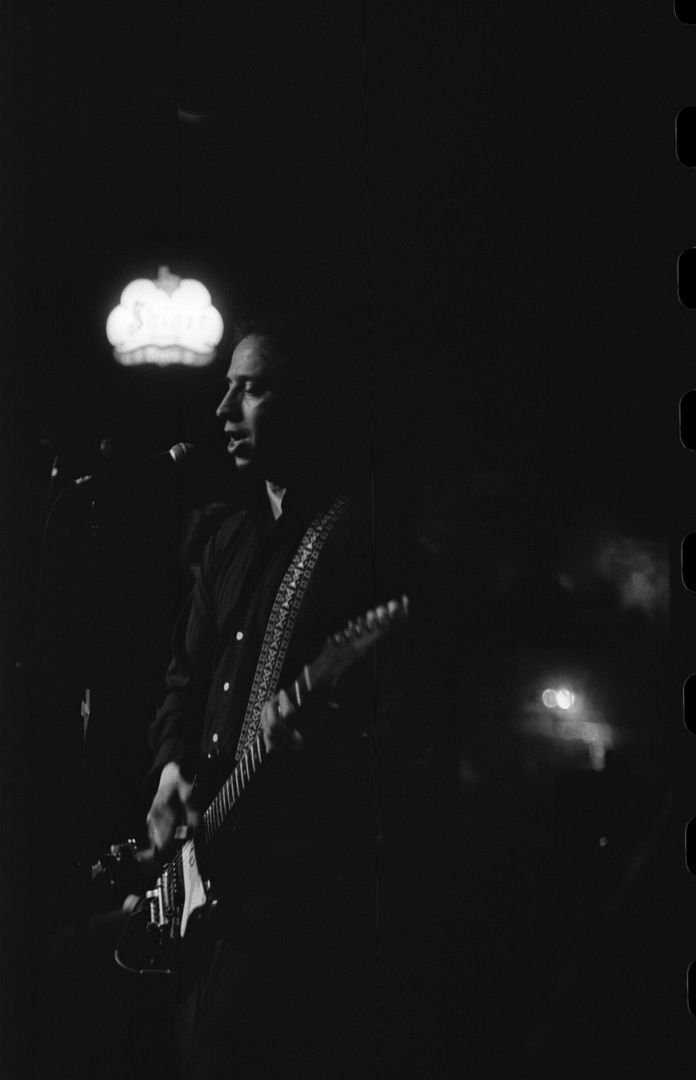
I thought I was being all clever, sneaking in a camera to the House of Blues last night. "If Chrissie Hynde sees a camera, she will stop the show right there!" the bouncer told us. That tall tale didn't daunt me one bit. I had a holga loaded up with Delta 3200 35mm film. Only one problem: I forgot to mask the back window, and the film fogged. Only one shot was arguably not COMPLETELY ruined.

You'll just have to trust me when I tell you that she looked and sounded magnificent!

You'll just have to trust me when I tell you that she looked and sounded magnificent!
Wednesday, February 25, 2009
What's 16 million between friends?
Annie Leibovitz pawns copyright to life's work to pay debts.Are we serious?
"Leibovitz secured the loan partly against properties she owns in New York, but also by putting up the copyright, negatives and contract rights to every photograph she has ever taken or will take in future as collateral, according to the New York Times, which cited documents filed to the city."
"Leibovitz secured the loan partly against properties she owns in New York, but also by putting up the copyright, negatives and contract rights to every photograph she has ever taken or will take in future as collateral, according to the New York Times, which cited documents filed to the city."
Sunday, February 8, 2009
Kodak Instamatic: The 1970s
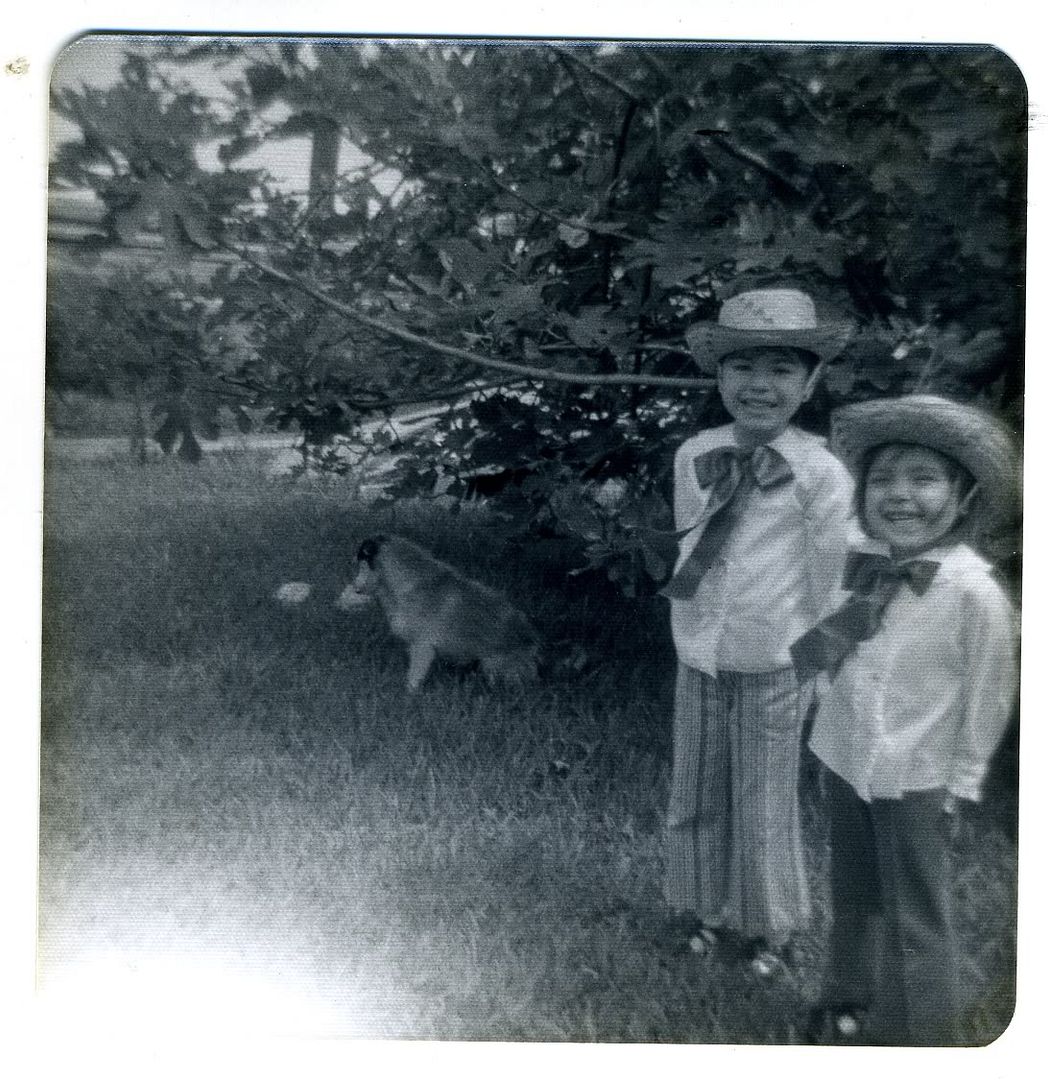
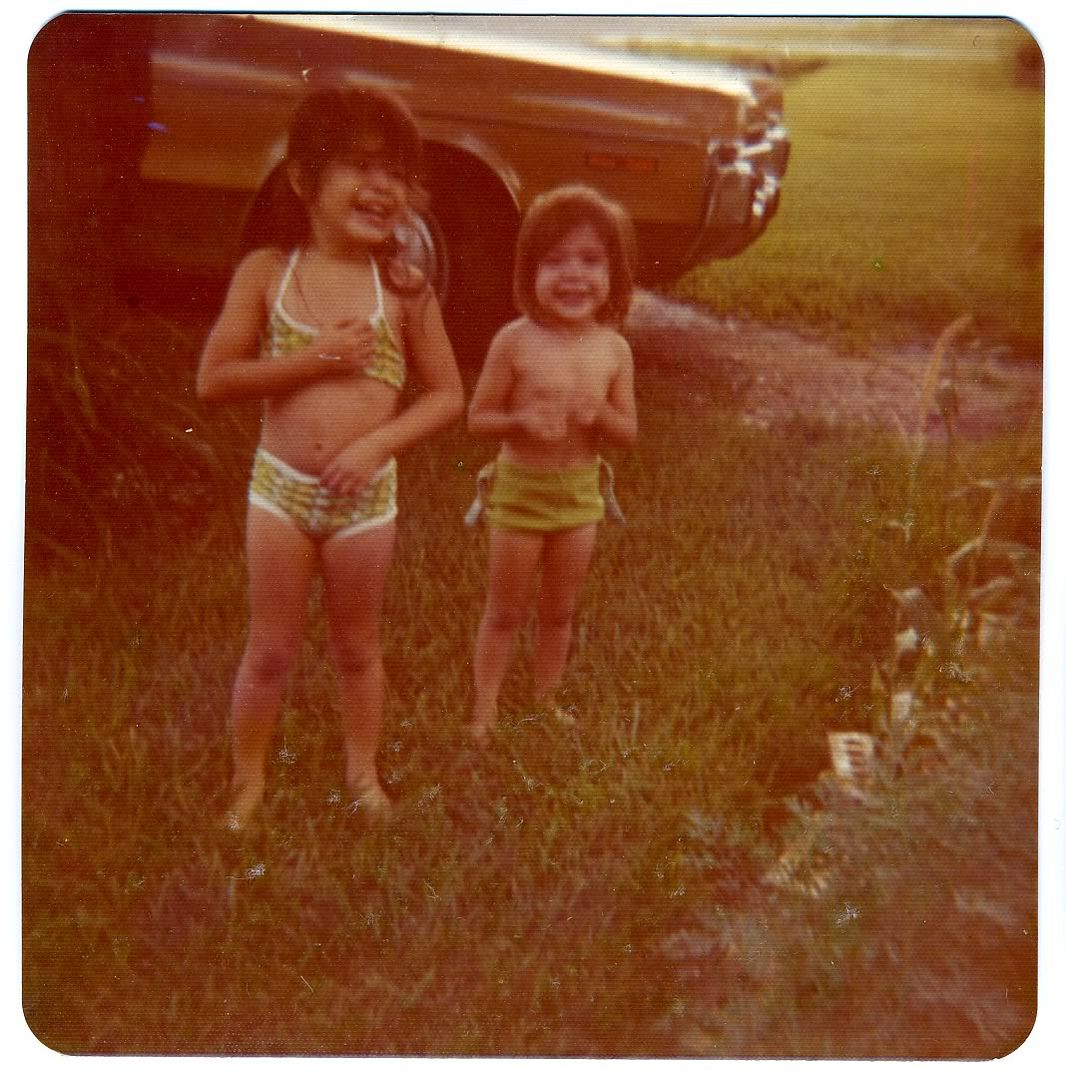
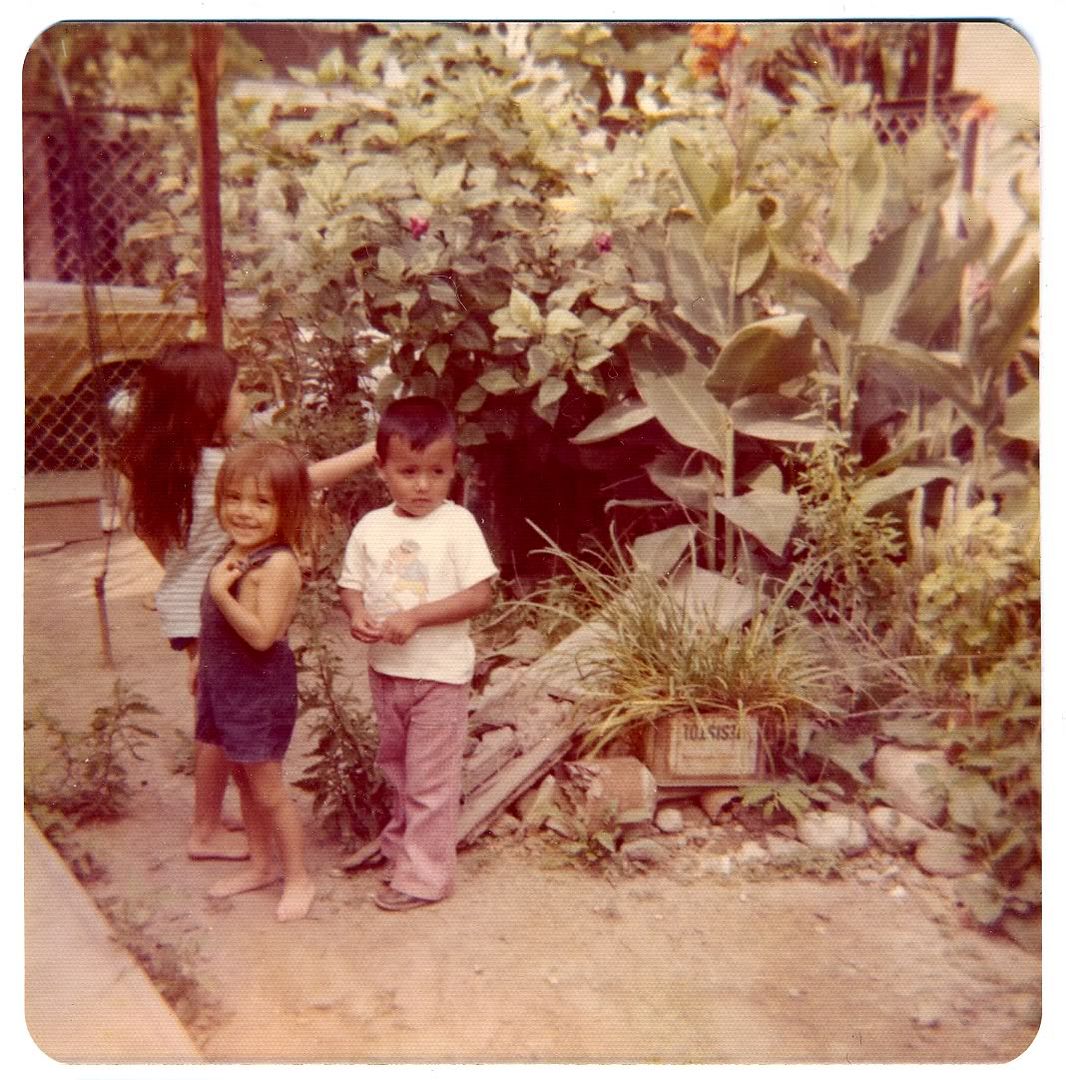
My mother, born in 1939, was just a wide-eyed recent immigrant in the early 70's when me and my sister were toddlers. I look back on our photographs and marvel at her deftness as a completely untrained photographer. She had an uncanny eye for light and composition. As a illiterate (in the English language) my mother is a prime example of what Orion's teacher means when she says "the ability to read is not a sign of intelligence"...
What I find interesting in today's digital world, is the fact that there was a time when you had to decide whether you wanted black and white or color at the point of sale, when the consumer was buying the film.
Her two main cameras in the late 60s and 70s were a Kodak Instamtic and a polaroid. I'll have to scan some of her polaroids in the future.


What I find interesting in today's digital world, is the fact that there was a time when you had to decide whether you wanted black and white or color at the point of sale, when the consumer was buying the film.
Her two main cameras in the late 60s and 70s were a Kodak Instamtic and a polaroid. I'll have to scan some of her polaroids in the future.

Tuesday, February 3, 2009
Efke Fotokemika 400: What it is not...

Well, well, well looks like Fotokemika Efke 400 "short date special 05/09" from Freestyle Photo Supply has come under fire (drama!) for posing as a "new" film when in reality, so the conspiracy theorists will tell you, it's (duh!) repackaged Ilford something-something-or-another. Of course I find this out after I purchased 10 rolls of the stuff ($3.99 for 36 exposures! Whoa!) and went looking for developing advice.
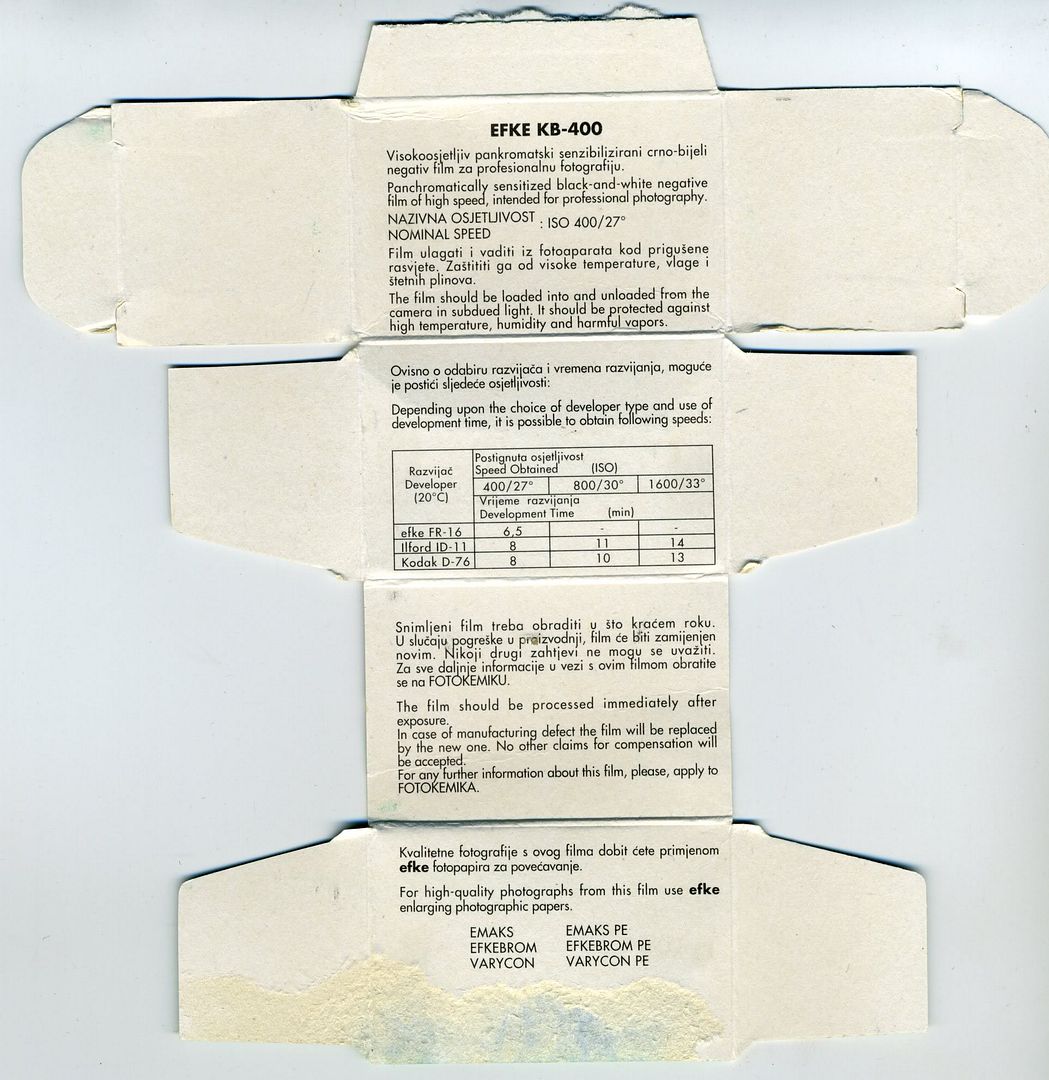
Now the prospect that I've been duped into buying Ilford film (which I don't buy because it dominates my local camera shop shelves to the detriment of variety) really had me irked. The selling point of the Efke was that it was a "new" formulation. I don't mean to dog Ilford film, it's just not me. Ilford is kind of like the PC of the computer world. Sure us Mac (Kodak, others) users are tedious and nerdy, but we like what we like. Don't hate!
In any case, I went to a last minute shoot, and all I had on hand was Adox CHS 100 - which would be too risky to use exclusively since these were going to be interior shots - and a new shipment of Efke 400. So off I went to Dead City Sound Studio to document my friends The Born Liars. I shot three Efkes and one Adox in the span of about two and half hours or so. Well, after coming home and putting the film in the can I can definitively say...drumroll please...
FOTOKEMIKA EFKA 400 FROM FREESTYLE (SHORT DATE SPECIAL)IS MOST CERTAINLY NOT REPACKAGED ILFORD PRODUCT. How can I be so sure? Spectrometers? Side by side comparisons with control subjects? Freedom-of-information-request-obtained emails? Nope. THE MOTHERFUCKING CURL GAVE IT AWAY.
Hey, some people think watching paint dry is boring but not me. I'm eyeing my Efke film dry on the vine - in my case watching the film hanging on the back of my bedroom door from a hanger, anchored at the bottom by wooden clothespins. And what I see is a film that is slowly, surely, rebelliously curling in on itself widthwise. Uuuugh.
Wai, wai, wait...Let me back up a second. I had my suspicions from the second I put the film in the camera that we weren't dealing with an Ilford film. It just felt different. The membrane itself was very thin and I had a hard time getting my Nikon to even load it. IN FACT, thank god I shot three rolls since the first roll I loaded jumped off the sprocket tracks and didn't record but the first two frames (of my the coffee table). Lesson here: When loading Efke 400, advance the film a few (at least three or four) frames with the camera back open to make SURE that the film is advancing properly. So anyways...
When it's dry enough to paw, I feel up my film and find that it is thin, almost papery, and as stiff as a metal measuring tape.. Not good. Good lord I'm having a heck of a time putting it in the scanner carriage. It simply won't comply. I'm having to weigh it down with one hand while elbowing the other strip into the film guide. Admittedly, the wine isn't helping but that isn't ever going to change...DON'T JUDGE!
One thing you can say about Kodak, Ilford, and Neopan...we may all have our diehard love and hates about these brands...but one thing they do have in common is the tactile suppleness of the film. They may be thick, which is a challenge for scanning the negative, but BY GOLLY, they lay flat on their back and do as their told on the scanner. By comparison, Efke 400 is curly and unruly. And before I forget!... opening the actual film canister was alarmingly easy. I barely had to use the can opener to pop the top off and it was open and exposed and ready to be loaded onto the reel. From now on, I'm going to be super careful about transporting the film since it seems like one good jostle and the film canister might bust open, that's how precarious the film roll seems put together. Now let's get to the goods.
For expediency sake, I developed it in the Diafine soup I already had laying on the kitchen counter. I was shooting interior shots with low light so I took a chance that this film would push at least one stop. Diafine is the LAST developer you want to use with Ilford film since it slows the film down slower than a foam cup of syzurp on a sultry Houston summer night.
Are you still with me? Are you waiting on me to dog this film? Is the anticlimax killing you? Fear not dear readers, I don't like to disappoint. The verdict on Fotokemika Efke 400 is this: RECOMMENDED. WHUHHHHH??!!!!
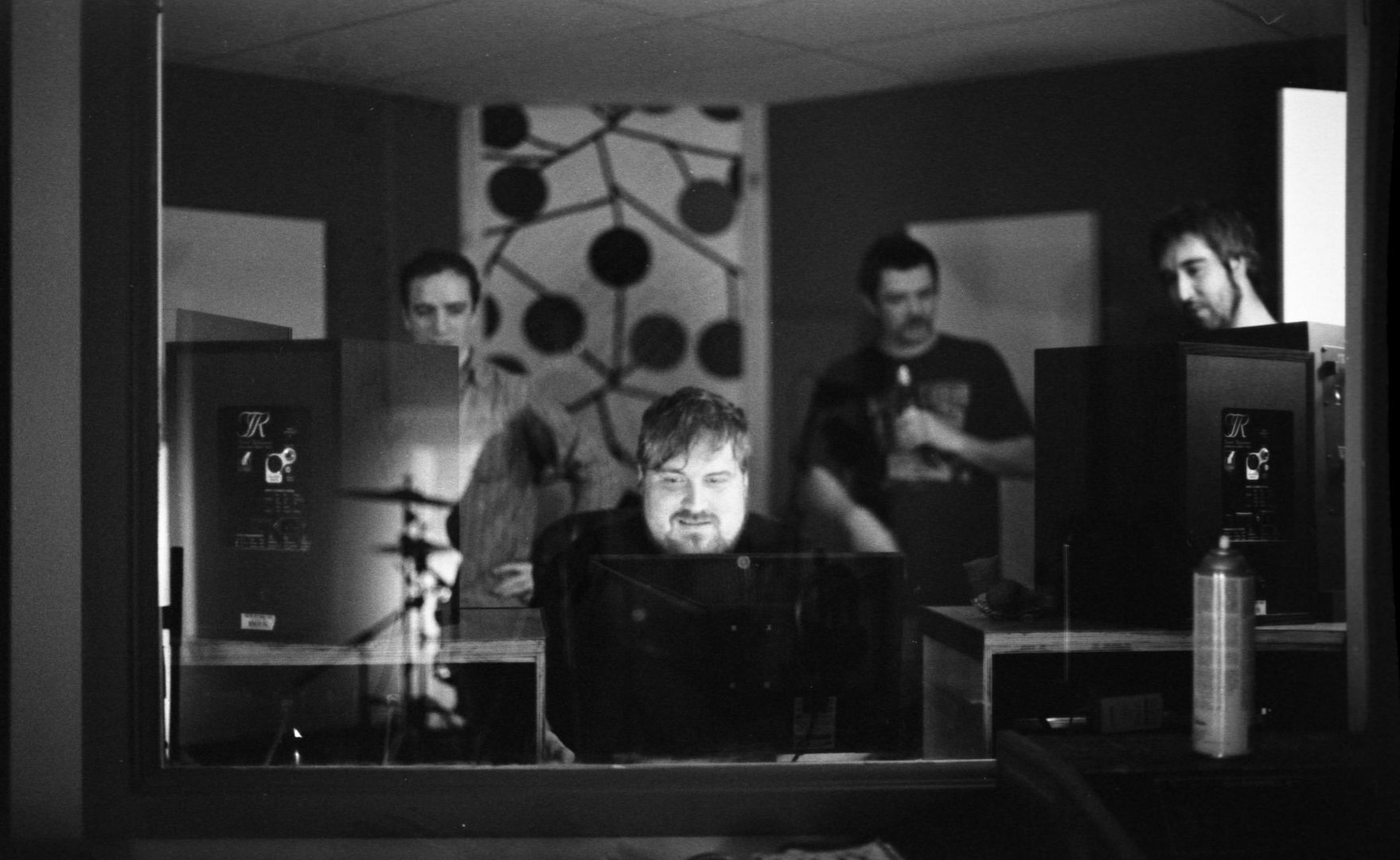
Nikon FA, 1/30 of a second, f1.4
OK! so I won't be developing alot of it again. OK! The curl will make you want to commit hare kare. OK! there is zero solid evidence that this isn't repackaged anything. But what I can tell you is the Efke 400 developed in Diafine has a satisfying big grain, which to this naked, durnken[sic] eye has a push of ~about~ one stop, and as with alot of annoying thin films, seems especially suited to scanning.

My advice? Do you need a cheap film that you won't be developing or scanning yourself? Do you want to exaggerate the fact that you are using film via larger-but-not golfball size hail? I mean grain? Are you on the rebound? THEN EFKE 400 IS FOR YOU! Knock yourself out...
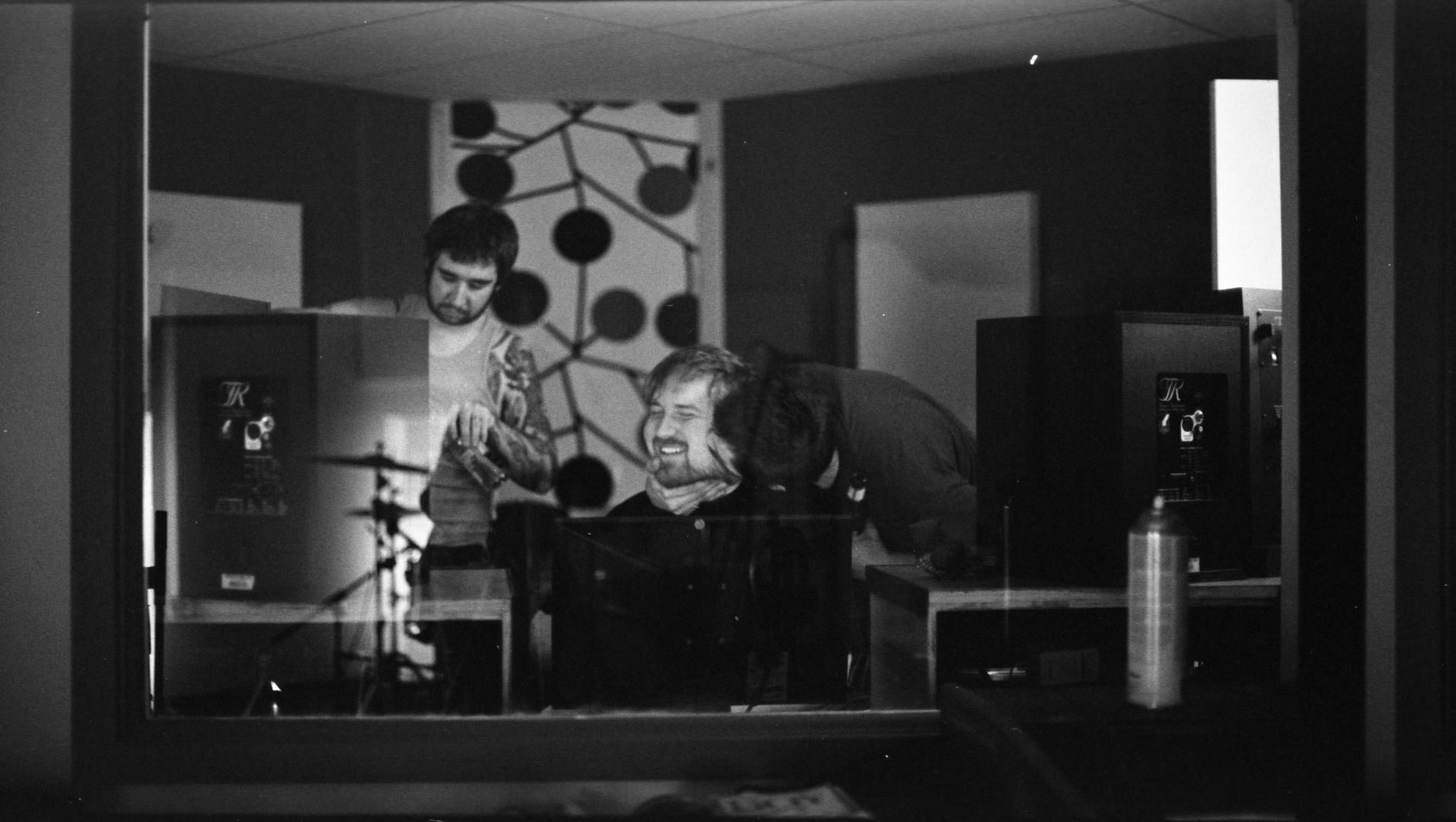
Lighting note: This was also at 1/30 of a second, on a tripod, shot through the glass of the control room. The lighting is from the computer screen and from an open closet door on viewer's right. The cymbal stand is a reflection on the glass.
Wednesday, January 7, 2009
Overblown: D76 at 9 1/2 minutes
I've been a bit lazy about carrying two cameras around my neck this season which I used to do it all the time. My modus operundi used to be to have my Nikon FA with a 20 or 24mm lens and a flash affixed around one shoulder. And on the other I'd have my Nikon F2 with a 50mm lens (sans flash). The reason I would do this is that I would push my non-flash film a stop or two, and process the strobe-lit film at-speed. But the cameras are so damn heavy! Plus it's hard to maneuver through a crowd without stabbing someone in the back with one of your protruding lenses. So it was with little (honestly) trepidation that I went up to the Gay Marriage show last month with one camera, two lenses, a flash, and a point-and-shoot.

Nikon FA, 50mm lens, F1.4, Tri-X 400, D76 at 9 1/2 minutes, scan of negative
That's Robert of the Assholes. It's a little contrasty, but I could fix it up in the darkroom easily if I wanted to.
Here is a scan of another frame of the same film strip. But this time I used a flash and a shorter lens with a larger f-stop (3.5, I believe).

This scan describes pretty vividly why *I* need to use two cameras if I want to use a flash and natural light. You may be able to discern that's Mikey of Gay Marriage. I turned the brightness way down in Photoshop and what I got left with was a really noisy image with really no redeeming characteristics. I wouldn't even attempt to print it in the darkroom.
For the record, Digital Truth recommends that the film be cooked for between 6.75 and 8 minutes to develop at-speed. At 9.5 minutes, I pushed the film (arguably) about one stop.
A note about chemistry: That was the last of my D76. I'll use it again in the future - it keeps well and it makes a fantastic backup. But I have a big order from Freestyle on the way: more Diafine, more Adox ATM49, and even some Rodinal which I've never used, plus a smattering of non-Tri-X film. This season is going to be about experimenting with chemistry - all the more reason to be consistent in the field.
This entry is a note to myself to not cry when I blow out film because I don't want neck-strain in the morning. Work harder! Do better!
Two cameras it is...sorry in advance if I poke you with my lens.
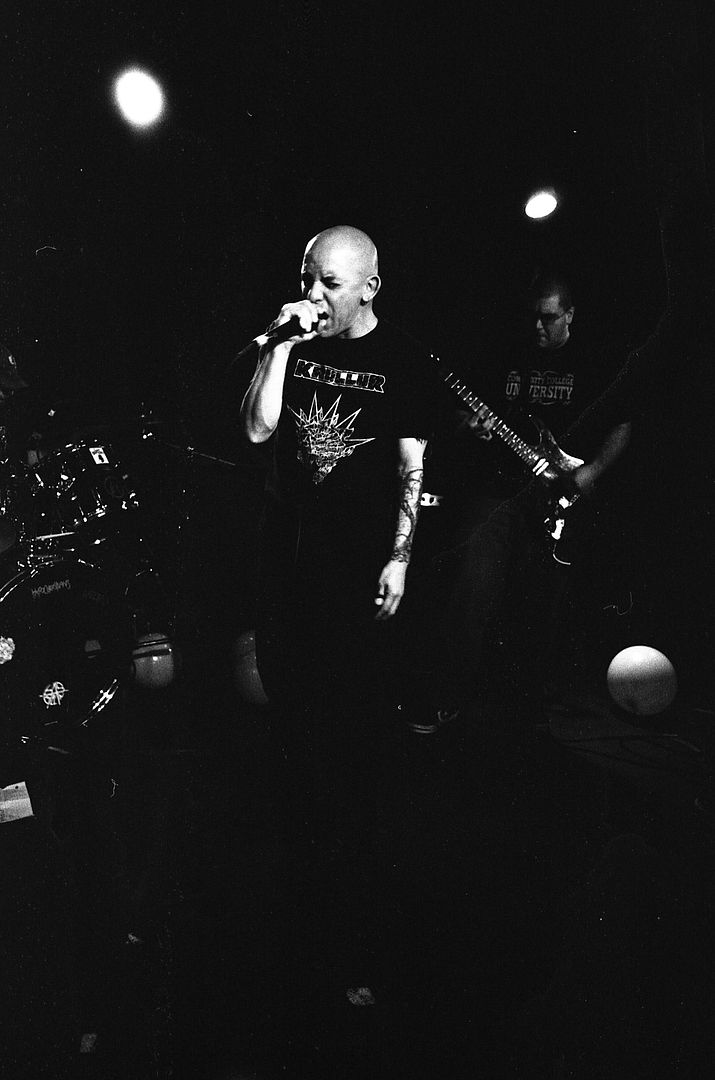
Nikon FA, 50mm lens, F1.4, Tri-X 400, D76 at 9 1/2 minutes, scan of negative
That's Robert of the Assholes. It's a little contrasty, but I could fix it up in the darkroom easily if I wanted to.
Here is a scan of another frame of the same film strip. But this time I used a flash and a shorter lens with a larger f-stop (3.5, I believe).
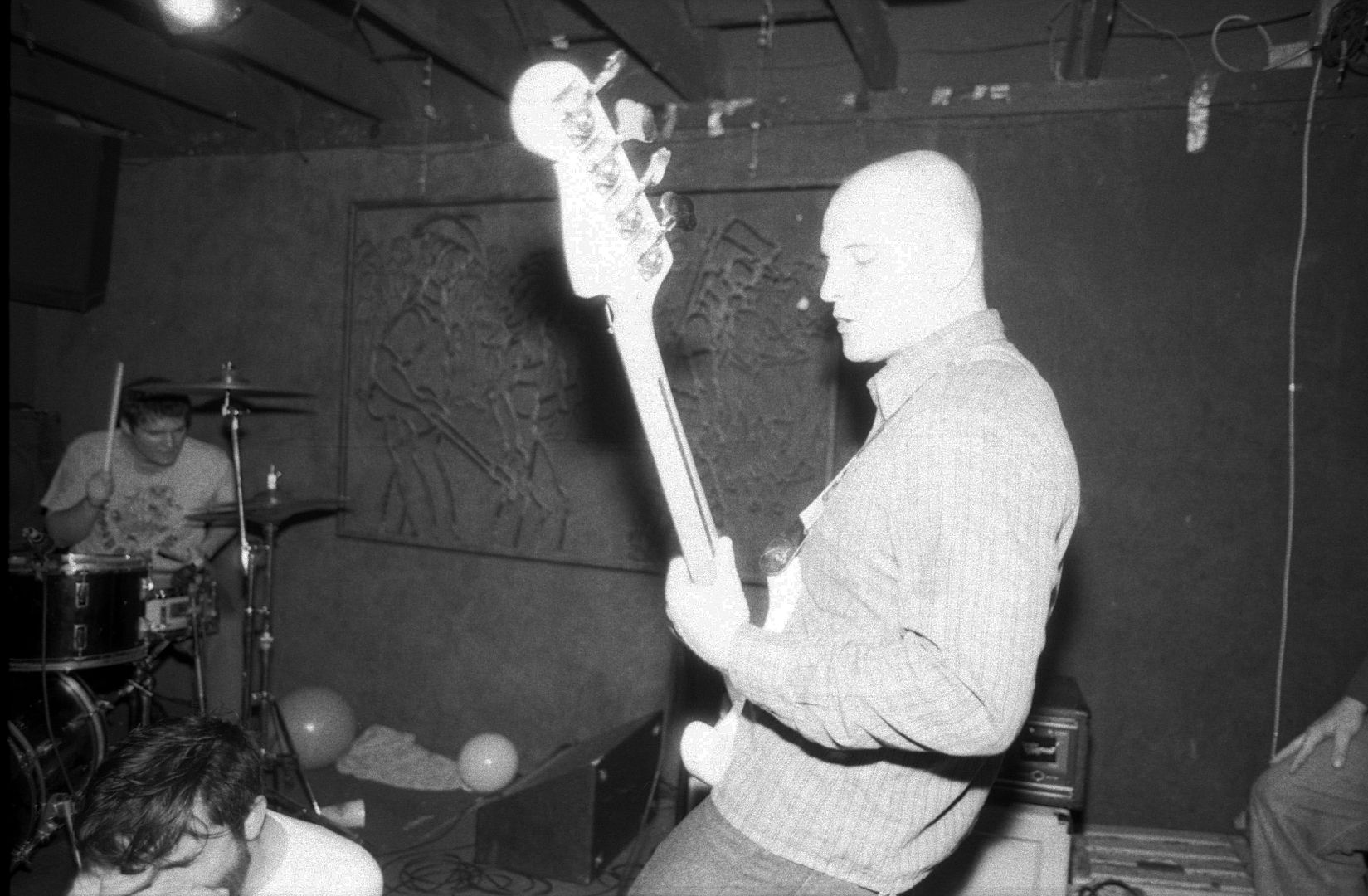
This scan describes pretty vividly why *I* need to use two cameras if I want to use a flash and natural light. You may be able to discern that's Mikey of Gay Marriage. I turned the brightness way down in Photoshop and what I got left with was a really noisy image with really no redeeming characteristics. I wouldn't even attempt to print it in the darkroom.
For the record, Digital Truth recommends that the film be cooked for between 6.75 and 8 minutes to develop at-speed. At 9.5 minutes, I pushed the film (arguably) about one stop.
A note about chemistry: That was the last of my D76. I'll use it again in the future - it keeps well and it makes a fantastic backup. But I have a big order from Freestyle on the way: more Diafine, more Adox ATM49, and even some Rodinal which I've never used, plus a smattering of non-Tri-X film. This season is going to be about experimenting with chemistry - all the more reason to be consistent in the field.
This entry is a note to myself to not cry when I blow out film because I don't want neck-strain in the morning. Work harder! Do better!
Two cameras it is...sorry in advance if I poke you with my lens.
Subscribe to:
Posts (Atom)


